




After months of relying on air conditioning, many North Metro Atlanta homeowners don’t think much about their furnaces until the first chilly night arrives.
You turn up the thermostat, expecting warm air, but nothing happens. Maybe the furnace keeps clicking without starting, or the blower runs long after the heat shuts off.
Could the furnace control board be responsible?
Possibly. But before assuming you need an expensive replacement, it’s worth knowing that several furnace problems can cause similar symptoms.
Here’s how to recognize a failing control board, what you can safely check, and when repair or replacement makes sense.
How Do You Know If Your Furnace Control Board Is Bad?
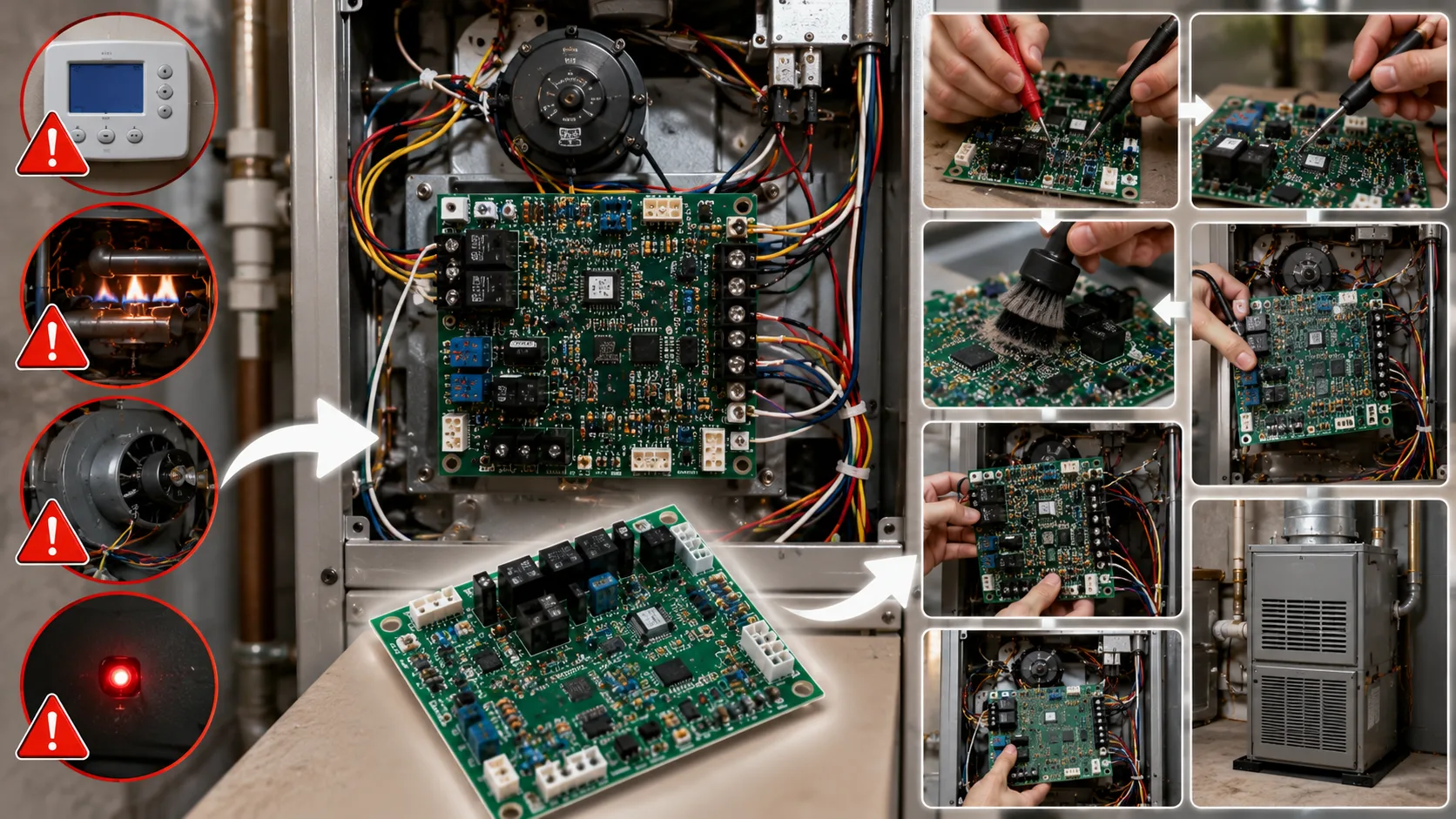
Common signs of a bad furnace control board include intermittent heating, a blower that won’t shut off, ignition failures, repeated clicking, or a furnace that doesn’t respond to the thermostat. Burning electrical odors may also indicate a problem.
However, these symptoms alone don’t confirm control board failure. A qualified HVAC technician must rule out other possible causes before recommending replacement.
What Does a Furnace Control Board Do?
Think of the control board as your furnace’s command center.
When your thermostat calls for heat, the board helps coordinate the ignition system, gas valve, blower motor, and safety controls. It also monitors certain operating conditions to keep the heating cycle running properly.
If the board stops communicating with these components, your furnace may struggle to start, heat inconsistently, or stop working altogether.
6 Signs Your Furnace Control Board May Be Failing

1. Your Furnace Won’t Turn On or Keeps Shutting Off
You raise the thermostat, but the furnace doesn’t respond. Or it starts heating, only to shut down before your home reaches the desired temperature.
A faulty board may interrupt the heating sequence. However, a failing ignitor, dirty flame sensor, or activated safety switch could cause similar problems.
2. The Blower Fan Won’t Stop Running
A blower that continues running after the heating cycle ends could indicate a stuck relay on the control board.
But check your thermostat first. If the fan is set to ON instead of AUTO, continuous airflow may be normal. An overheating safety limit can also keep the blower running.
3. Your Furnace Doesn’t Respond to the Thermostat
If your thermostat calls for heat but the furnace ignores it, the board may not be processing the signal correctly.
However, damaged wiring, low-voltage power problems, or the thermostat itself could be responsible.
If your thermostat screen is blank, start by checking for a power-related issue.
4. You Notice Flashing LED Error Codes
Many modern furnaces display diagnostic codes through a blinking LED.
A flashing error code doesn’t necessarily mean the control board is bad. Often, the board is working correctly and reporting an ignition, pressure switch, or overheating problem elsewhere.
A technician can interpret the code using your furnace manufacturer’s instructions.
5. There’s a Burning Electrical Smell
A persistent burning plastic or electrical odor could indicate overheated wiring, damaged connections, or a failing control board component.
Unlike the brief dusty smell that sometimes occurs when heating starts, an electrical burning smell shouldn’t be ignored.
Shut off the furnace if it’s safe to do so and arrange a professional inspection. If there’s smoke or fire, evacuate and contact emergency services.
6. Your Furnace Makes Repeated Clicking Noises
Some clicking during startup is normal as relays and ignition components activate.
However, repeated clicking accompanied by failed ignition attempts could indicate a faulty relay, ignitor, or control board.
Pay attention to when the clicking happens. That detail can help your technician narrow down the problem.
What Should You Check Before Blaming the Control Board?
Not every furnace problem requires an expensive repair. Before calling for service, try these simple checks if there are no immediate safety concerns:
- Thermostat: Make sure it’s set to HEAT and the desired temperature is higher than the current room temperature.
- Power supply: Check the furnace switch and circuit breaker. Don’t repeatedly reset a breaker that keeps tripping.
- Air filter: A clogged filter can restrict airflow and trigger overheating-related shutdowns.
- Diagnostic lights: If visible through a viewing window, note the flashing pattern to share with your technician.
If these checks don’t resolve the problem, it’s time for professional help.
Stop using the furnace if you notice persistent electrical burning odors, smoke, or repeated electrical failures. If you smell gas or a carbon monoxide alarm sounds, leave the home and contact the appropriate emergency service.
Never bypass furnace safety switches or attempt electrical repairs yourself.
How Do Technicians Confirm a Bad Furnace Control Board?
A professional diagnosis involves more than noticing an error light or a furnace that won’t start.
HVAC technicians diagnose a faulty furnace control board by checking its power supply, thermostat signals, safety circuits, and electrical outputs. If the board receives the correct signals but fails to activate the required components, an internal failure may be responsible.
Sometimes, the actual problem is a loose connection, damaged wiring, or a blown fuse caused by another electrical fault.
That’s why accurate diagnosis matters. Replacing a perfectly functional board won’t solve the underlying problem.
Can a Furnace Control Board Be Repaired or Replaced?

Minor electrical problems associated with the control board may be repairable, but an internally failed board generally requires replacement.
A technician might correct damaged external wiring or replace a blown fuse after identifying its cause. However, repairing individual electronic components on the board isn’t typically recommended for residential furnaces.
Replacement boards may be original manufacturer (OEM) parts or compatible universal models. The correct option depends on your furnace’s specifications.
How Much Does Furnace Control Board Replacement Cost?
Furnace control board replacement typically costs $300 to $700 nationally in 2026, including parts and labor.
According to Angi’s 2026 furnace control board cost guide, the replacement board itself generally costs $50–$300, with professional labor commonly ranging from $150–$450.
Diagnostic inspections may cost an additional $80–$100, depending on the company and whether that fee is included in the repair.
These are national estimates, not guaranteed prices for your Kennesaw-area home. Advanced OEM boards and complex repairs can cost more.
Should You Replace the Board or the Entire Furnace?
If your furnace is relatively new, reliable, and otherwise in good condition, replacing the control board is usually the more economical choice.
However, if your furnace is approaching 15–20 years old, needs frequent repairs, or has other major problems, it’s worth comparing repair costs with replacement.
A failed control board alone doesn’t mean you need a new furnace.
Our furnace replacement budgeting guide can help you evaluate your options.
How Long Does a Furnace Control Board Last?
Furnace control boards often last 10–15 years or longer, although electrical surges, moisture, damaged wiring, and normal aging can shorten their lifespan.
You can’t prevent every failure, but a few habits can help protect your heating system.
Replace standard air filters as needed, often every one to three months, and keep the furnace area clean and dry. Professionally installed surge protection may also reduce electrical damage risks.
Annual heating maintenance gives technicians an opportunity to identify electrical concerns, airflow restrictions, and other developing problems.
Frequently Asked Questions
Where Is the Furnace Control Board Located?
The furnace control board is usually inside the furnace cabinet, often near the blower compartment. Its exact location depends on the model. Avoid opening electrical compartments or handling the board without proper training.
Can a Furnace Control Board Fail Without an Error Code?
Yes. A control board can fail without displaying an error code. However, a dark diagnostic LED may also indicate a power interruption, blown fuse, or failed transformer rather than a defective board.
Can You Replace a Furnace Control Board Yourself?
Professional replacement is recommended because furnace control boards connect to electrical components and safety controls. Incorrect installation or configuration can damage the equipment or create unsafe operating conditions.
Get Your Furnace Working Again With Top Tech Mechanical
When your furnace starts acting up, it’s easy to assume the worst. But a bad control board is only one possibility, and replacing parts without knowing the cause can get expensive.
At Top Tech Mechanical Services, we help homeowners throughout Kennesaw and North Metro Atlanta get to the bottom of furnace problems. Our technicians can identify what’s causing the trouble and explain whether a repair, control board replacement, or system upgrade makes the most sense.
You deserve a reliable heating system and clear answers about what it takes to get it working again.
Schedule your furnace repair with Top Tech Mechanical Services and let our team help restore your home’s comfort.